

Beyond the Spice Rack: Black Pepper, Piperine & The Nectar of Life
There is a good chance a jar full of black pepper is sitting on your kitchen shelf right now. It gets sprinkled over veggies, stirred into dal, and mostly in tea. But beyond that, this small black seed has shaped ancient trade routes, filled royal treasuries, and powered some of Ayurveda's most effective formulas for ages.
The Black Pepper Sitting on Your Table
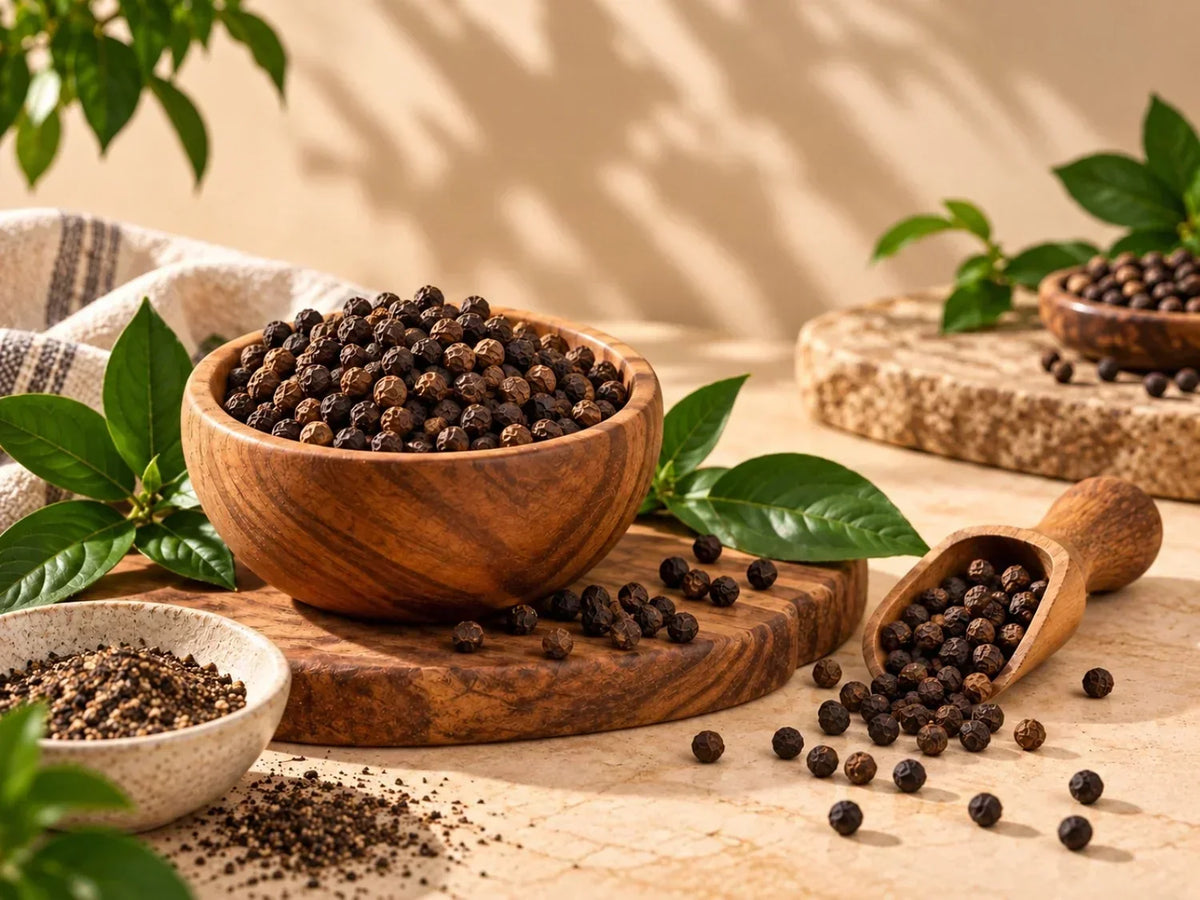
Black pepper, or Kali Mirch, comes from Piper nigrum, a flowering vine native to the Malabar coast of Kerala. The berries are picked while still green, then sun-dried until they turn into the wrinkled black peppercorns everyone recognises as the “King of spices.”
Little would you know that green, black, and white pepper all come from the same berry. The difference is in processing. Black pepper is the whole berry, picked young and dried with its skin intact. That skin holds most of the aromatic oils, and is why black pepper tastes stronger than white.
Piperine: The Compound Behind the Pungency
Piperine is the alkaloid responsible for pepper's bite and heat. Piperine typically makes up somewhere between 2 and 9 percent of a peppercorn's weight, depending on the variety and how it was dried. In a well-known 1998 clinical study, adding just 20 mg of piperine to 2 g of curcumin, turmeric's active compound, raised curcumin's measured levels in the human bloodstream by 2000 percent.
Piperine works by slowing down how quickly the liver and gut break certain compounds down, so more of them stay in circulation for longer. This effect has been studied most closely with curcumin, and to a lesser extent with compounds like CoQ10, beta-carotene, and vitamin B6.
Maricha: Black Pepper in Ayurveda
Ayurveda calls black pepper ‘maricha’. It is described as pungent in taste (katu rasa) and heating in energy (ushna virya). Maricha is used to kindle agni, the digestive fire, and to clear kapha-related sluggishness such as heaviness, congestion, cough, and low appetite.
Because it is heating in effect, Ayurveda advises caution for anyone with a pitta-dominant constitution or existing acidity. Maricha also rarely appears alone in classical texts. It is almost always paired with other herbs.
Trikatu: The Three Pungents
As mentioned above, that pairing has a name: Trikatu, meaning "three pungents," and combines equal parts of black pepper, long pepper, and dry ginger.
|
Herb |
Role In trikatu |
|
Maricha (Black Pepper) |
Stimulates digestion, helps clear toxins |
|
Pippali (Long Pepper) |
Supports respiratory health, milder heat |
|
Shunthi (Dry Ginger) |
Aids digestion, eases inflammation |
Trikatu is one of Ayurveda's oldest combination formulas, traditionally used for indigestion, sluggish metabolism, and coughs with congestion. It is a good early example of something modern pharmacology only highlighted later, i.e., some herbs work better as a team.
Why Piperine Gets So Much Attention In The Modern Age
Modern supplements picked up black pepper because of absorption. Several plant compounds, such as curcumin and resveratrol, are poorly absorbed on their own. By adding a small amount of piperine, you change the story noticeably.
However, the catch lies in the dose. Clinical studies use small, standardised amounts, typically 5 to 20 mg of piperine, not spoonfuls of ground pepper. Piperine can also affect how the liver processes certain medications, including some blood thinners, so anyone on regular medication should consult with a doctor before taking concentrated pepper or piperine supplements.
From Single Spice to Herbal Formulation
A single herb, however good on its own, often works harder as part of a formulation. Larger benefits of black pepper are frequently less about its own effect and more about making sure the rest of the blend actually gets used by the body.
The table below shows different pairings of black pepper and its purpose:
|
Pairing |
Purpose |
|
Black Pepper + Ginger |
Clears respiratory congestion, ignites digestive fire (agni), accelerates sluggish metabolism. |
|
Black Pepper + Amla |
Optimises vitamin C absorption, supports liver detoxification |
|
Black Pepper + Shankhpushpi |
Sharpens cognitive focus, improves memory retention, helps calm a restless mind. |
|
Black Pepper + Tulsi |
Directs antimicrobial compounds into respiratory pathways to break fevers and clear throat congestion. |
|
Black Pepper + Turmeric |
Multiplies curcumin absorption by 2,000% to maximize cellular anti-inflammatory benefits |
Why Black Pepper Is Integral to the Nectar of Life
The Nectar of Life Kadha by JiViSa includes black pepper as one of its core herbs, alongside Turmeric, Tulsi, Ginger, Shankhpushpi, and Liquorice. Its purpose in our formulation follows the same logic Ayurveda has relied on for centuries: to relieve cough and cold, add warmth, and help the body make better use of the other herbs in the blend.
It is a small but valuable quantity working a specific job, present for function rather than to overpower the honey-ginger-lemon flavour the Nectar of Life is known for.
Frequently Asked Questions
1. What is kali mirch good for?
Kali mirch, or black pepper, is traditionally used to help clear congestion, support digestion, and improve the body's absorption of other nutrients and herbs.
2. What exactly is piperine?
Piperine is the alkaloid compound that gives black pepper its heat. It is also studied for its ability to improve the absorption of compounds like curcumin from turmeric.
3. Why is black pepper added to turmeric or herbal supplements?
Because piperine slows down how quickly the body breaks certain compounds down, which allows more of them to be absorbed and used.
4. Is Trikatu safe to take every day?
In food-level, culinary amounts, yes. Concentrated Trikatu supplements are best used under guidance, especially for anyone with acidity or on regular medication.
5. Does black pepper interact with medicines?
Piperine can affect how the liver processes certain drugs, including some blood thinners. Anyone on regular medication should check with a doctor before using concentrated pepper or piperine supplements.
6. Is black pepper used the same way in every Ayurvedic formula?
No. Ayurveda uses black pepper, long pepper, and ginger differently depending on the formulation and what it needs to achieve, which is why ancient and traditional recipes name exact herbs instead of treating every pungent spice as one.


