

Benefits: Uses, Ayurvedic Significance & Why It's In JiViSa's Nectar of Life
Long before kadha came in a sachet, it came from grandmothers’ kitchens. The moment someone in the family coughed or sneezed, a knuckle of ginger was crushed right away and dropped into boiling water, alongside other herbs.
Ancient Ayurvedic texts have documented ginger for centuries. It still appears in modern clinical trials for similar reasons. Here we break down what the root actually does, what Ayurveda says about it, and why it earns its place in our ‘Nectar of Life’ kadha.
What Is Ginger – Know The Root/s
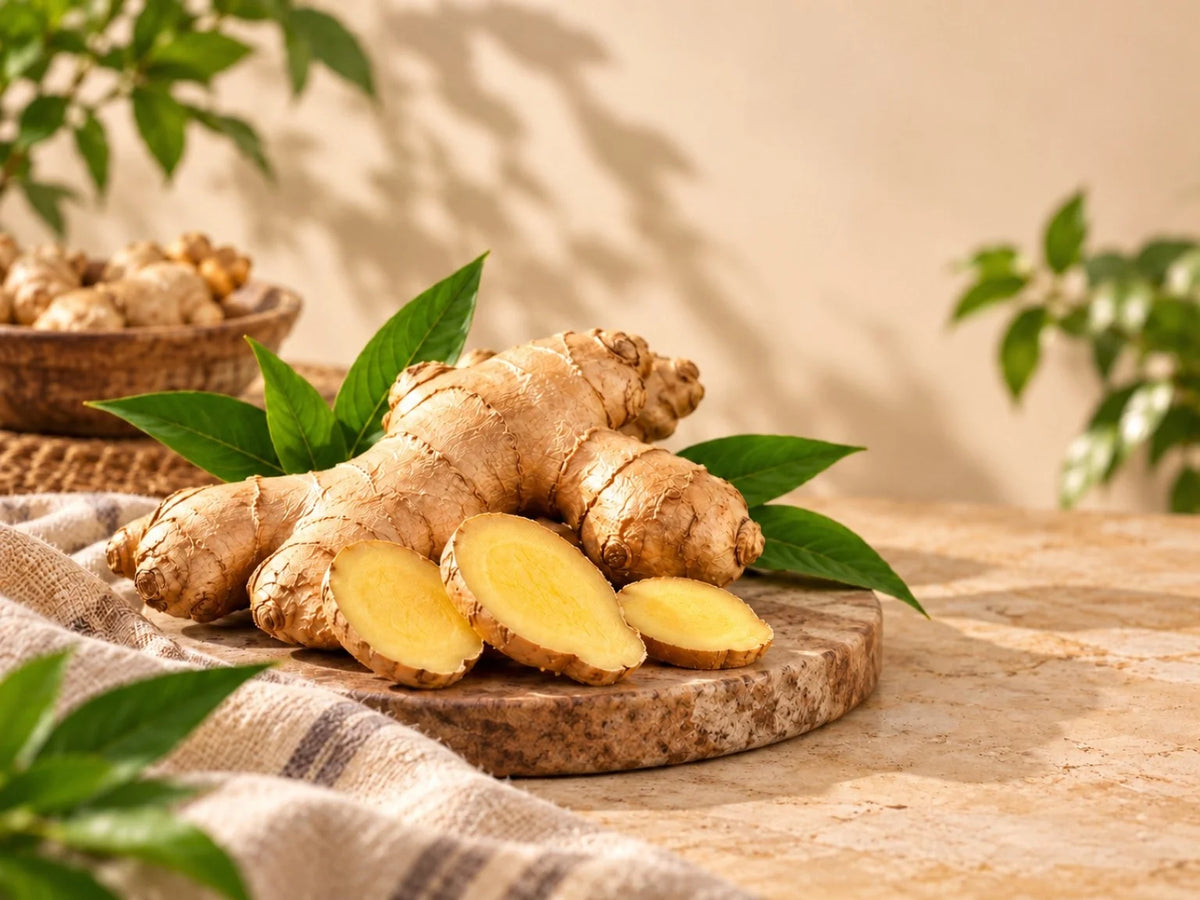
Technically, ginger, or Zingiber officinale, is a rhizome, not a root. It belongs to the same botanical family as turmeric and cardamom: an underground stem that stores energy and sends up shoots. The plant first originated in the tropical forests of Southeast Asia and reached India thousands of years ago, where it found its home permanently in both the kitchen and the medical labs. Today, India stands as the world's largest producer of ginger.
Ayurveda, on the other hand, recognises two versions of the same plant. Fresh ginger, also known as ardraka in Sanskrit or adrak in modern Hindi, and dried ginger, called shunthi or sonth. Classical texts treat the two as separate medicines with separate uses.
What Makes Ginger So Versatile?
The signature benefits of ginger come from two compound families: gingerols and shogaols. Gingerols are dominant in the fresh root, and shogaols form once the ginger is dried or cooked. These two compounds drive most of ginger's benefits and action against inflammation, nausea, cold, stress, etc., which is why the same rhizome (ginger) shows up in a curry, a cough remedy, and a cup of kadha.
The table below shows a few different forms of Zingiber officinale and its popular use cases:
|
Form |
Where It’s Typically Used |
|
Fresh (Ardraka) |
Cooking, juices, throat-soothing home remedies |
|
Dried powder (Shunthi) |
Kadha, spice blends, longer shelf life |
|
Ginger oil |
Massage and aromatic use |
|
Ginger extract |
Standardised dosing in supplements and functional drinks |
Ginger In Ayurveda
In Ayurveda, ginger is called Vishwabhesaj, or literally a "universal medicine." It appears in a majority of traditional formulations as a core ingredient supporting the rest of the recipe. Ayurveda explains ginger not in modern biomedical terms but through rasa panchaka, i.e., its taste, energy, and effect after digestion.
|
Property |
Fresh Ginger (Ardraka/adrak) |
Dry Ginger (Shunthi) |
|
Rasa (taste) |
Katu (pungent) |
Katu, but milder |
|
Virya (energy) |
Ushna (heating) |
Ushna, more concentrated |
|
Vipaka (post-digestive effect) |
Katu (pungent) |
Madhura (sweet) |
|
Effect on Doshas |
Pacifies Vata and Kapha |
Pacifies Vata and Kapha, gentler on Pitta |
Because dry ginger carries a sweet vipaka, Ayurveda considers it better suited for daily use. That's why shunthi (not raw ginger) is the form used in most traditional kadha recipes, including instant ones.
Ginger has a central role in supporting agni, or the digestive fire. The Charaka Samhita and the Sushruta Samhita describe its use for refined appetite and clearing ama, or metabolic toxins present inside our bodies. This is why ginger is used at the start of Indian meals to this day.
Ginger Through Time – Ancient Spice Route To Modern Wellness
Ginger, or adrak, is amongst those Indian spices that have had one of the oldest trade histories in the world. It's believed to have been adapted from the wild in Southeast Asia around 5,000 years ago and reached India and China by roughly 2000 BCE. It featured in early Chinese pharmacopeias and likewise in the ancient Indian Charaka and Sushruta Samhitas.
From India, Arab and later Roman traders carried it westward along the spice routes. Greek physician and the father of pharmacognosy, Dioscorides wrote of its digestive benefits in the 1st century CE. By the medieval period, ginger traded alongside pepper and cinnamon, and by the 16th century a pound of it reportedly cost almost as much as a sheep in England.
What's changed since isn't ginger or its benefits; it's the proof. Ancient doctors relied on observation, while modern researchers have pharmacology, like gingerol and shogaol, and lab trials to study the same root.
Ginger Benefits – Where It Fits Into Everyday Wellbeing
Fresh ginger root carries close to 80 calories per 100 grams, along with protein, fibre, and potassium, magnesium, manganese, copper, and vitamin B6, on top of its gingerol and shogaol content.
|
Area |
What Evidence Shows |
|
Digestion & nausea |
Trials link ginger to reduced nausea, including pregnancy-related and chemotherapy-induced nausea |
|
Cough, cold, and respiratory comfort |
Used traditionally as a remedy against cough, cold, and throat irritation |
|
Inflammation |
Gingerols and shogaols show anti-inflammatory activity in lab and human tests |
|
Metabolic markers |
Meta-analyses report small improvements in oxidative stress and blood-sugar-related markers with regular intake |
|
Menstrual comfort |
Limited but positive trial data suggests ginger can help ease period pain |
Worth Knowing: Ginger for digestion is generally safe in food-level amounts, but daily intake above roughly 4 g, or any concentrated medicinal use, calls for caution, especially if you're pregnant, on blood thinners, or living with gallstones. Speak with an Ayurvedic practitioner or a doctor before increasing intake.
Ginger With Other Herbs
Ginger for health rarely works alone in Ayurveda. It's traditionally paired with herbs and ingredients that either extend its warming action or balance out its pungency.
|
Pairing |
Purpose |
|
Ginger + Black Pepper |
Clears respiratory congestion and boosts metabolic fat burning. Perfect in a kadha! |
|
Ginger + Honey |
Softens ginger's heat and soothes the throat, a classic cough remedy |
|
Ginger + Amla |
Provides antioxidant defense and reduces digestive overburden |
|
Ginger + Tulsi |
Both support respiratory comfort, found in nearly every traditional kadha |
|
Ginger + Turmeric |
Two Zingiberaceae relatives combined for their shared anti-inflammatory reputation |
This is kind of a blueprint behind most Indian remedies and kadha recipes: ginger as the warming base, other herbs layered on for specific purposes.
Why Ginger Is In Nectar Of Life
The Nectar of Life is an instant kadha formulated by us, with ginger being one of the major and key herbs in its 13-herb formulation. Alongside other botanical ingredients like Tulsi, Turmeric, Black pepper, Shankhpushpi, and Amla, the Nectar of Life soothes the throat, adds warmth, and supports digestion, relieving you of stuckness instantly.
Its honey-ginger-lemon flavour echoes the same combination Ayurveda has used for cough and cold comfort for generations, minus the sugar, any added additives or colour, and the hour spent boiling a pot. Being an instant blend activated with warm water, it's made to be a permanent member of your daily morning cups, beyond just the days you're unwell.
Already tried Nectar of Life? Leave a review or explore more of our carefully curated bestsellers.
Frequently Asked Questions
1. Is ginger the same as ardraka and shunthi?
Ardraka refers to fresh ginger in Sanskrit, and shunthi to the dried form of ginger. Ayurveda treats them slightly differently, with shunthi considered gentler for regular, long-term use.
2. How much ginger is safe to have daily?
Most health bodies place the safe daily limit at around 4 g for adults in food or beverage form. If you’re a pregnant woman or on blood thinners should keep intake lower and check with a doctor.
3. Does ginger really help with cold and cough?
Ayurveda has used ginger as a medicine and throat soother for ages. Its warming, anti-inflammatory compounds are why it stays predominant in cold-season remedies like kadha.
4. Why is ginger paired with honey and lemon so often?
Honey softens ginger's heat, and lemon adds a light touch, making the pungency easier to sip regularly. This is exactly why the profile and flavour of our Nectar of Life brings this combination in an instant form.
5. Can I drink ginger-based kadha every day?
Yes, in food-level amounts. Formulated kadhas like the Nectar of Life are built for daily use, though anyone with gallstones, bleeding disorders, or on regular medication should check with their doctor first.


